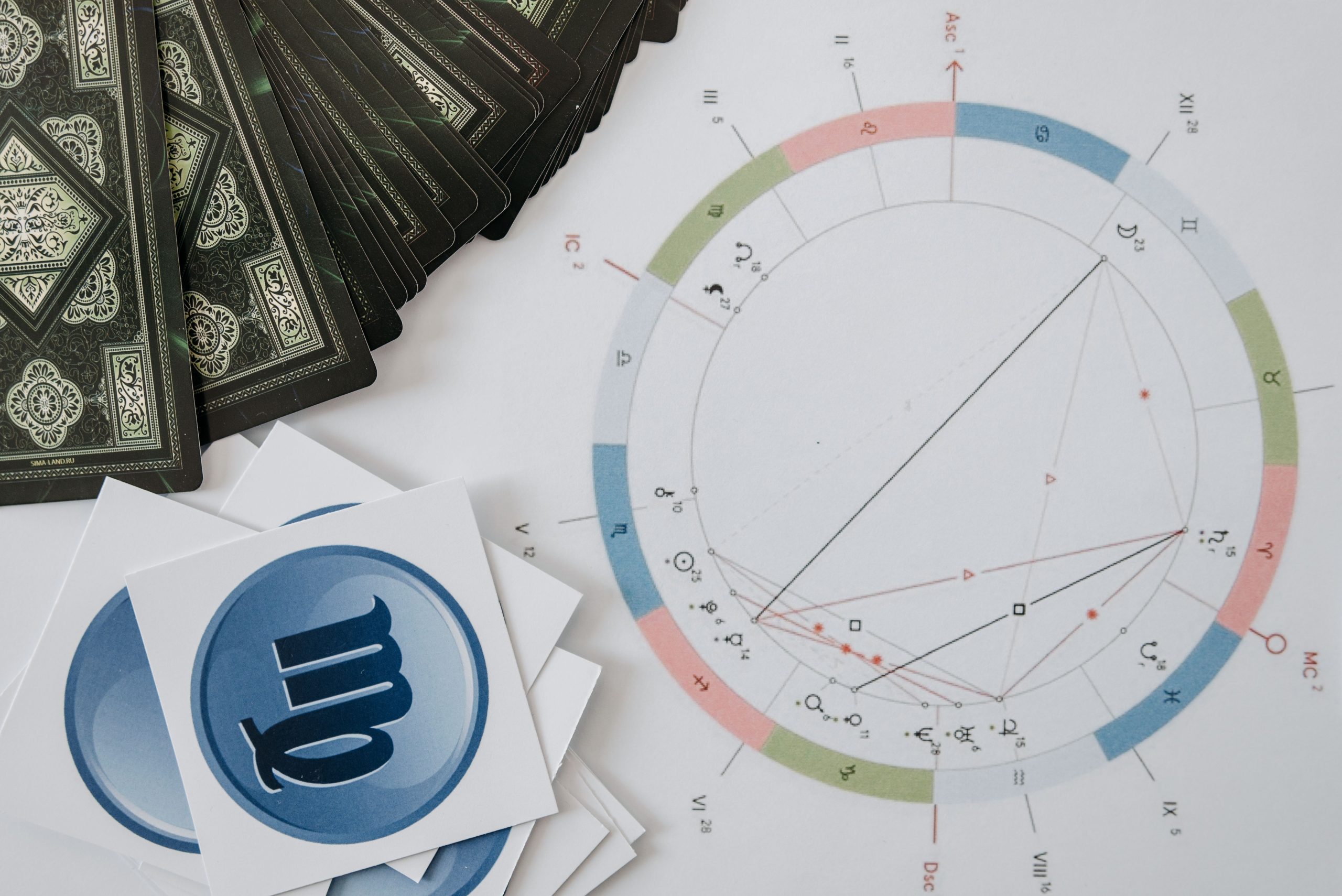
So you’ve pulled up your birth chart for the first time and are staring at a colorful wheel filled with symbols, lines, and numbers. It can feel overwhelming, like trying to read a map of a foreign city without a legend. But here’s the good news: learning how to read your birth chart for beginners is simply a matter of understanding a few core pieces and how they fit together. Think of your chart as a cosmic snapshot of the sky at the exact moment you were born. It reveals your core energies, motivations, and the areas of life where you’ll naturally shine or face challenges. This guide will walk you through each component step by step, so you can start interpreting your own natal chart with confidence and curiosity.
What Is a Birth Chart? (Definitional Block)
The Natal Chart as a Cosmic Snapshot
A birth chart, also called a natal chart, is a map of where every planet and celestial body was located at the precise time and place of your birth. Unlike a daily horoscope, which is generalized for an entire zodiac sign, your birth chart is entirely unique to you. It shows the positions of the Sun, Moon, Mercury, Venus, Mars, Jupiter, Saturn, Uranus, Neptune, and Pluto, as well as the Ascendant (rising sign), the Midheaven (MC), and other sensitive points. Each of these elements is placed within one of the 12 zodiac signs and one of the 12 houses, creating a complex web of meaning that describes your personality, strengths, challenges, and life path.
Why Your Birth Chart Is Unique
Because the sky changes every four minutes, even twins born minutes apart can have different rising signs and house placements. Your chart is calculated using your exact date, time, and location of birth. This specificity is what makes how to interpret your natal chart such a personal and revealing practice. It’s not about predicting the future; it’s about understanding the energies you were born with and how they tend to play out in your life.
The Core Components of a Birth Chart
Planets – The Energies
The planets represent different parts of your psyche and the core drives within you. The Sun is your core identity and ego. The Moon reflects your emotions and inner world. Mercury governs communication and thought processes. Venus rules love, beauty, and values. Mars is your drive, ambition, and how you assert yourself. The outer planets—Jupiter (expansion), Saturn (structure and lessons), Uranus (innovation), Neptune (dreams and intuition), and Pluto (transformation)—operate on a generational level but gain personal meaning through their house placement and aspects.
Here are quick keyword reminders for each planet to help you read your chart:
- Sun – core identity, ego, life purpose
- Moon – emotions, instincts, inner needs
- Mercury – communication, thought patterns, learning
- Venus – love, beauty, values, money
- Mars – drive, aggression, physical energy
- Jupiter – expansion, luck, philosophy, growth
- Saturn – structure, discipline, restrictions, responsibility
- Uranus – innovation, rebellion, sudden change
- Neptune – dreams, intuition, spirituality, illusion
- Pluto – transformation, power, deep renewal
Zodiac Signs – The Filters
Each planet is located in a specific zodiac sign, which colors how that planet’s energy expresses itself. For example, Venus in Aries tends to be bold and impulsive in love, while Venus in Taurus is steady and sensual. The sign shows the how of the planet’s expression.
Houses – The Arenas of Life
The 12 houses represent different life areas, from identity and money to relationships and career. Where a planet falls in the houses tells you where that energy is most likely to manifest. For instance, Mercury in the 3rd house suggests a natural talent for communication and learning, while Mercury in the 10th house points to a career involving speaking or writing.
Aspects – The Relationships Between Planets
Aspects are the angles planets make to each other in your chart. They describe how different parts of your personality interact—whether they support each other or create tension. The five major aspects are the building blocks of any birth chart aspects for beginners study.
| Aspect | Angle | Meaning |
|---|---|---|
| Conjunction | 0° | Intense blending of two planetary energies; they work together very closely. |
| Sextile | 60° | Harmonious and supportive; opportunities for growth with some effort. |
| Square | 90° | Challenge and tension; friction that pushes you to grow and take action. |
| Trine | 120° | Flow and ease; natural talents and effortless expression. |
| Opposition | 180° | Polarity and awareness; two energies that seem at odds but can balance each other. |
How to Read Your Birth Chart Step by Step
Step 1: Find Your Rising Sign (Ascendant)
Your rising sign is the zodiac sign that was on the eastern horizon at your birth. It’s the most important angle in your chart because it sets the entire house system. Think of it as the mask you wear when meeting the world—your first impression. To learn more about this key placement, read our guide on What Does My Rising Sign Mean.
Step 2: Identify Your Sun and Moon Signs
Your Sun sign is your core self, and your Moon sign is your emotional nature. Together with your rising sign, these three form the “big three” of your chart. Write them down and note which houses they fall in.
Step 3: Look at the Planets in Signs and Houses
Now, go through each planet and note its sign and house. For example, if your Mars is in Gemini in the 5th house, you might express your drive through playful, intellectual hobbies or creative writing. This is where a planets in signs and houses meaning reference becomes invaluable.
Step 4: Note the Aspects (Start with Conjunctions and Oppositions)
Look at the lines connecting the planets on your chart. Red lines usually indicate squares and oppositions (challenging aspects), while blue lines show trines and sextiles (harmonious aspects). Conjunctions are often marked by a tight cluster of symbols. Begin by noting any conjunctions (planets very close together) and oppositions (planets directly across from each other). These will have the most noticeable impact on your personality.
Step 5: Synthesize the Story (Example Walk-Through)
Let’s say you have your Sun in Leo in the 10th house (career and public life), your Moon in Cancer in the 4th house (home and family), and your Mars in Aries in the 1st house (identity and self-expression). A synthesis might read: “You are driven to be a leader in your career (Sun in 10th), but you need a strong emotional foundation at home (Moon in 4th). Your assertive, pioneering energy is very visible to others (Mars in 1st).” This is the art of step-by-step birth chart reading.
Understanding the 12 Houses (with a Quick-Reference Table)
The houses are the “where” of your chart. Here’s a quick overview of each house and the life area it governs.
| House | Life Area | Short Meaning |
|---|---|---|
| 1st | Self, appearance, identity | How you present yourself to the world. |
| 2nd | Money, possessions, values | What you own and what you value. |
| 3rd | Communication, siblings, short trips | How you think, speak, and learn. |
| 4th | Home, family, roots | Your private life and emotional foundation. |
| 5th | Creativity, romance, children, fun | Self-expression, pleasure, and play. |
| 6th | Health, daily routines, service | Work habits, wellness, and helping others. |
| 7th | Partnerships, marriage, open enemies | One-on-one relationships and contracts. |
| 8th | Shared resources, transformation, intimacy | Deep bonds, inheritance, and rebirth. |
| 9th | Higher education, travel, philosophy | Expanding your horizons and belief systems. |
| 10th | Career, reputation, public life | Your professional path and legacy. |
| 11th | Friendships, groups, hopes and dreams | Community, social networks, and aspirations. |
| 12th | Subconscious, solitude, spirituality | Hidden strengths, dreams, and inner world. |
Angular Houses (1, 4, 7, 10) – Key Life Areas
These are the most powerful houses, representing major life themes: identity (1st), home (4th), relationships (7th), and career (10th). Planets here are very active and noticeable.
Succedent Houses (2, 5, 8, 11) – Stability and Resources
These houses follow the angular ones and deal with resources, creativity, shared assets, and friendships. They represent what we build and stabilize.
Cadent Houses (3, 6, 9, 12) – Learning and Transition
These houses are about communication, daily work, higher learning, and the subconscious. They are more internal and preparatory in nature.
Frequently Asked Questions About Reading Your Birth Chart
Here are concise answers to common questions beginners have about how to read your birth chart for beginners.
- What is a birth chart? A birth chart is a map of the sky at your exact moment of birth, showing the positions of the planets, signs, and houses.
- How do I get my birth chart for free? You can use reputable online calculators like Astro.com or Cafe Astrology. You’ll need your exact birth date, time, and location.
- What is the most important part of a birth chart? The “big three”—your Sun sign, Moon sign, and rising sign—are the foundation. The rising sign sets the house system.
- What do the red and blue lines mean on my chart? Red lines usually indicate challenging aspects (squares, oppositions), while blue lines show harmonious aspects (trines, sextiles).
- How do I read aspects in my birth chart? Look for the angle between two planets. Conjunctions (0°) blend energies; squares (90°) create tension; trines (120°) bring ease.
- What is the difference between a birth chart and a horoscope? A birth chart is a personal, static map. A horoscope is a forecast based on current planetary movements relative to your chart.
- Which house system should I use? Placidus is the most common for beginners. Whole Sign is simpler and also widely used. Stick with one as you learn.
- Can I read my birth chart without knowing my birth time? You can, but your rising sign and house placements will be less accurate. A noon chart is a common workaround.
For a deeper foundation, check out our article on What Is a Birth Chart and Why It Matters, and if you’re curious about how numerology complements astrology, read Understanding Your Life Path Number.
Learning how to read your birth chart for beginners is a journey of self-discovery. Start with the big three, then explore the planets in signs and houses, and finally, look at the aspects. Each layer adds depth to your understanding. Remember, your chart is a tool for reflection, not a rigid script. The more you practice, the more intuitive it becomes.
Leave a Reply